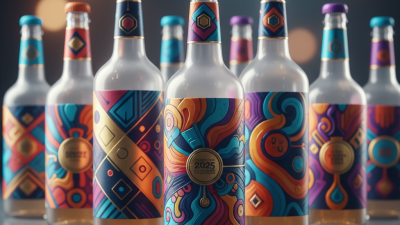
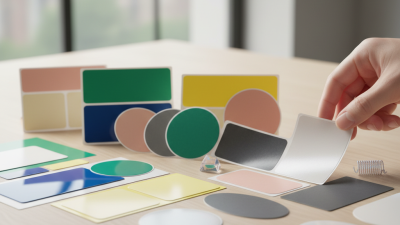
Top 10 Custom Labels for Every Need and Solution?
In the world of custom labels, precision and creativity play crucial roles. As industry expert Sarah Johnson once said, “Custom labels are more than just tags; they’re a reflection of your brand.” This insight highlights the importance of selecting the right labels for various applications, from product packaging to event planning.
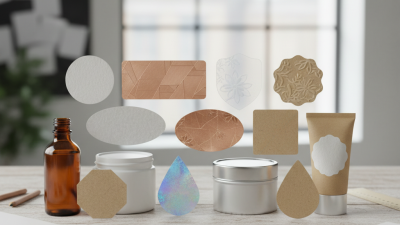
Custom labels come in a variety of shapes, sizes, and materials. Each design offers unique benefits and can meet different needs. For example, waterproof labels are essential for products exposed to moisture. Meanwhile, eco-friendly labels appeal to the environmentally conscious consumer. Many businesses struggle to find the perfect label that aligns with their brand message. This challenge invites a deeper exploration into the versatility of custom labels.
Choosing the correct label requires thoughtful consideration. It’s easy to get lost in the vast options available. Some might overlook their specific requirements, leading to wasted resources. Exploring the top 10 custom labels for every need can help streamline this process. By understanding each type, businesses can make informed decisions that enhance their visibility and brand identity. Custom labels can elevate a common product into something distinct, but finding the right one isn't always straightforward.
Types of Custom Labels: Understanding Your Options
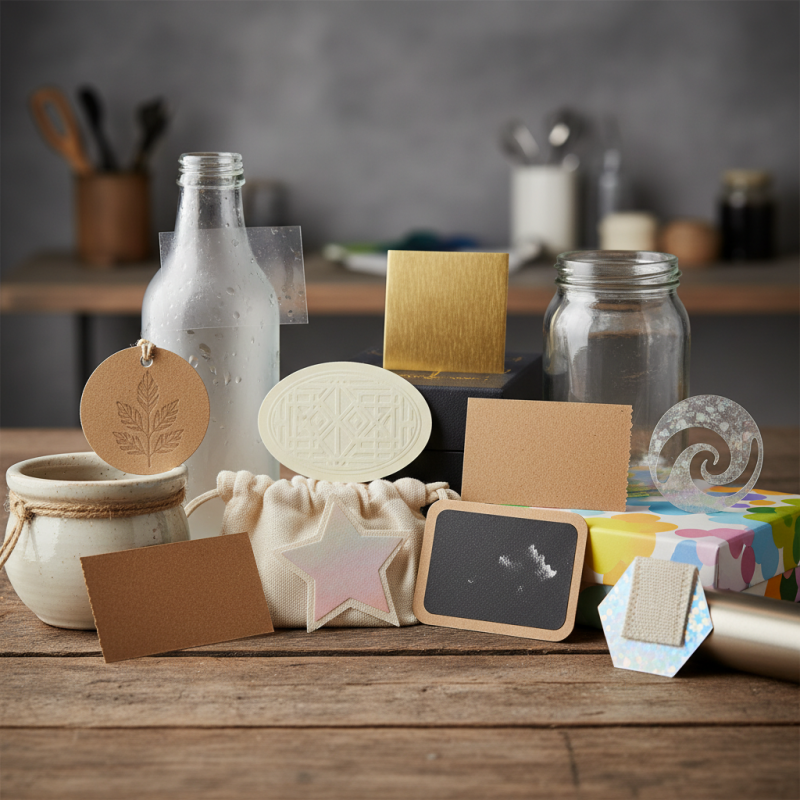
Custom labels offer versatility across numerous industries. Understanding the various types becomes essential in selecting the right label for your needs. According to a recent industry report by Smithers Pira, the global market for labels is expected to reach over $48 billion by 2024. This growth reflects the increasing demand for personalized solutions in numerous sectors, including food, beverage, and retail.
There are several categories of custom labels. Pressure-sensitive labels are among the most popular due to their easy application. They are used widely for product branding and information. Another type, shrink sleeves, provide a 360-degree design. They conform closely to the product shape, which enhances shelf visibility. However, some users find them difficult to apply without expert assistance. Adhesive labels also have their place. They are ideal for packaging and encompass a range of materials, including paper and vinyl. However, selecting the wrong adhesive can result in poor adhesion.
Understanding your options is vital. Data from the Label Manufacturers Institute shows that companies can boost their sales by up to 20% with effective labeling. It's clear that investing time into choosing the right custom label type is imperative. Remember, it is crucial to balance aesthetics with functionality. Neglecting to consider the environment can lead to waste, both in terms of materials and resources.
Materials and Adhesives: Choosing the Right Fit for Your Needs
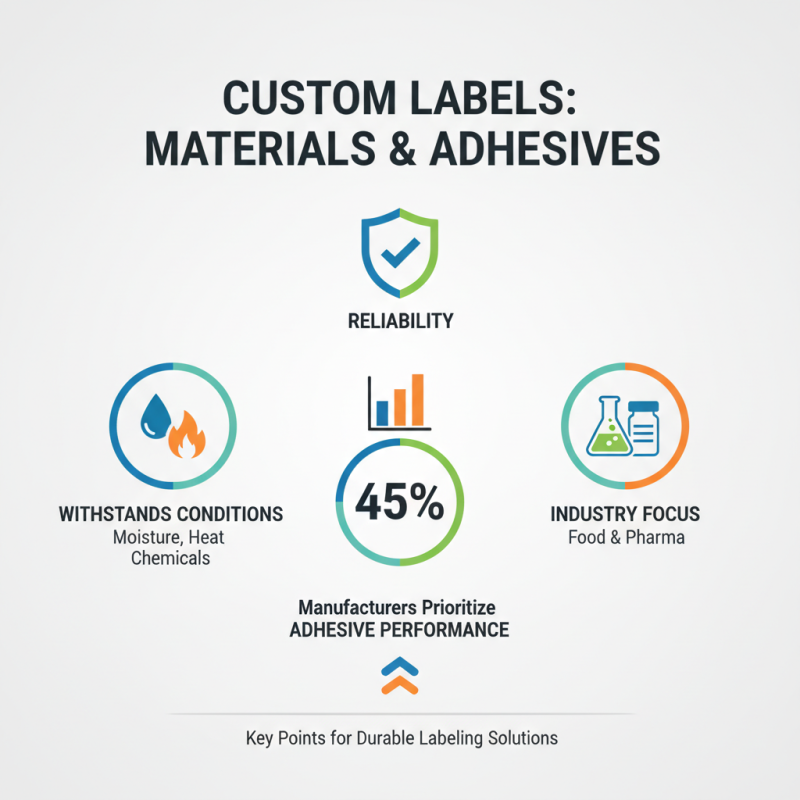
When selecting custom labels, the choice of materials and adhesives is crucial. Many industries, such as food and pharmaceuticals, require labels that withstand specific conditions. According to a recent industry report, nearly 45% of manufacturers prioritize adhesive performance in their labeling solutions. This percentage shows the importance of having reliable stickers that can resist moisture, heat, and even chemical exposure.
Not all labels are created equal. For example, paper labels offer affordability but may not endure harsh environments. Conversely, synthetic materials like polyester provide better durability. However, they may come at a higher cost. A survey indicated that 35% of companies regretted their choice due to durability issues. This highlights the need for thorough evaluation before making selections.
Another aspect to consider is the adhesive type. Pressure-sensitive adhesives are often the go-to for many applications. However, they may not adhere well to all surfaces. Some materials, such as low-energy plastics, require specialized adhesives. A significant number of users have reported difficulties in this area, underscoring the necessity for research on adhesive compatibility. Avoiding mistakes in material selection is essential for optimal label performance.
Designing Custom Labels: Tips for Attractive and Functional Labels
When designing custom labels, aesthetics and functionality are both crucial. Research indicates that 70% of consumers base their purchase decisions on packaging. An appealing label can draw attention and influence buying behavior. For instance, vibrant colors and eye-catching designs can boost visibility on crowded shelves. However, it’s essential to stay on-brand and maintain consistency in design.
Functionality should not be overlooked. Labels must be durable and resistant to wear. According to industry reports, about 30% of customers complain about label failure in demanding environments. Labels that peel off or fade can lead to poor customer experiences. Using quality materials is a wise choice. Eco-friendly options are increasingly popular, reflecting a shift in consumer preferences.
Another key aspect is clarity. Labels must convey necessary information quickly. Studies show that 62% of customers appreciate concise messaging. Cluttered designs can confuse rather than inform. This balancing act between creativity and clarity requires thought. It’s valuable to seek feedback early. Not all designs hit the mark; iterations are part of the process.
Top 10 Custom Labels for Every Need and Solution
Applications of Custom Labels: Where They Are Most Useful
Custom labels have a wide range of applications. They can be used for organizing items at home or labeling products for a small business. In offices, custom labels help keep files sorted and quickly accessible. Their versatility covers many areas, making them a valuable tool for various needs.
In the food industry, custom labels play a crucial role. They provide essential information about ingredients and allergens. Labels add a professional touch to homemade products. Personalized labels can also enhance branding for small food ventures. However, some may overlook the importance of clear and accurate labeling, leading to potential confusion for consumers.
Custom labels are also prevalent in healthcare settings. They are used on medication bottles to ensure safety. Mislabeling can have serious consequences, making accuracy paramount. Moreover, in education, teachers rely on labels for classroom organization. This aids students in their learning process. Yet, not all labels are created equal; choosing the right material and design requires careful thought.
Printing Techniques: Options for Creating High-Quality Labels
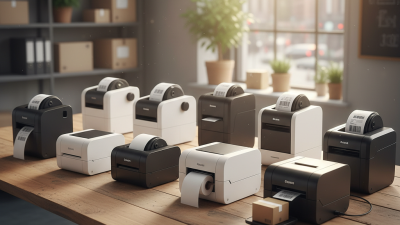
Label printing techniques play a vital role in creating high-quality custom labels. Advances in technology have made it easier to produce labels that are not only visually appealing but also durable. Digital printing is one popular method. It accounts for nearly 30% of the label printing market. This technique ensures consistency and quick turnaround times for custom orders.
Flexographic printing is another widely used method in the industry. It is known for its efficiency, particularly in large-scale production. This technique uses flexible relief plates to transfer ink, making it suitable for various materials. A recent survey notes that flexographic printing is preferred by 55% of label manufacturers. However, achieving precise color matching can sometimes be a challenge.
Another noteworthy technique is screen printing. It is often used for labels that require vibrant colors and thicker inks. This method is especially popular for product labels in outdoor settings. It provides excellent resistance to wear and tear. On the downside, screen printing can be less economical for small runs. Understanding these techniques can help in selecting the right option for specific labeling needs.
Top 10 Custom Labels for Every Need and Solution
| Label Type |
Material |
Printing Technique |
Durability |
Typical Use Cases |
| Vinyl Labels |
Vinyl |
Digital Printing |
Waterproof |
Outdoor Use, Stickers |
| Paper Labels |
Paper |
Flexographic Printing |
Standard |
Products, Packaging |
| Clear Labels |
Polypropylene |
Inkjet Printing |
Moderate |
Beverage Labels, Cosmetics |
| Thermal Transfer Labels |
Synthetic |
Thermal Transfer Printing |
High |
Shipping, Inventory |
| Eco-friendly Labels |
Recycled Paper |
Water-based Ink |
Low |
Organic Products |
| Metallic Labels |
Metallic Film |
Offset Printing |
High |
Luxury Products |
| Waterproof Labels |
Polyester |
Laser Printing |
Extreme |
Food Items |
| Custom Shape Labels |
Various Materials |
Die-Cut |
Varies |
Promotional Items |
| Writable Labels |
Matte Paper |
Digital Printing |
Standard |
Addressing, Marking |
| Static Cling Labels |
Cling Vinyl |
Screen Printing |
Reusable |
Window Displays |