Understanding the Importance of Product Labels in Consumer Choice
Product labels play a crucial role in influencing consumer choices. According to Dr. Emily Carter, a renowned expert in marketing and consumer behavior, "Labels provide essential information that helps consumers make informed decisions." In an age where choices abound, product labels serve as a guiding light for shoppers.
When consumers navigate store aisles, they often rely on product labels to understand what they are purchasing. These labels not only list ingredients but also convey crucial information about quality and safety. They can sway decisions between two similar products. Yet, the reality is that many consumers overlook critical details. They may ignore labeling symbols or nutritional facts that could impact their health.
The significance of product labels extends beyond simple information. They can create emotional connections. Well-designed labels can evoke trust or curiosity. However, not all labels are created equal. Some may mislead or confuse shoppers, prompting questions about their reliability. It’s vital for consumers to be vigilant and informed. They should scrutinize labels to truly understand what they are buying. Through awareness, consumers can refine their choices and drive market demand for better labeling practices.
The Role of Product Labels in Shaping Consumer Preferences
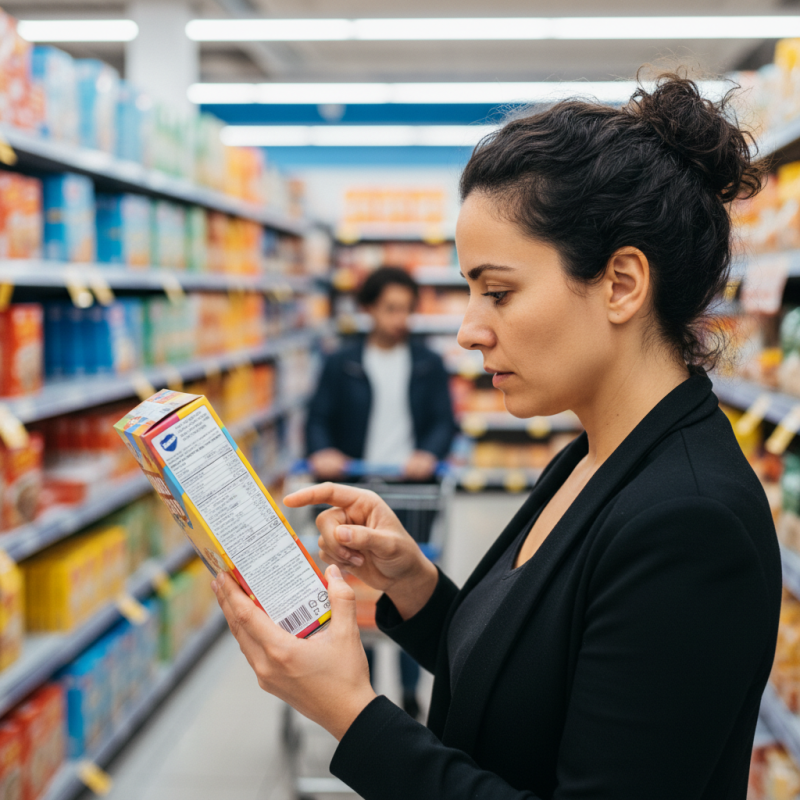
Product labels play a critical role in shaping consumer preferences. They provide essential information about the product's ingredients, nutritional value, and potential allergens. When consumers face a myriad of choices, these labels help simplify decision-making. Bright colors and bold fonts can catch the eye, making a product stand out. However, design does not always translate to quality. Consumers must assess the substance behind the stylish labels.
For many, labels evoke emotional responses. A label that emphasizes "organic" or "natural" often draws attention. Yet, the meaning of such terms can vary. Sometimes, products are only partially organic. This raises questions about transparency. Labels can be misleading, intentionally or not, which can lead to disappointment after purchase. Consumers should reflect critically on the information provided.
Moreover, many products carry certifications, like non-GMO or cruelty-free. These labels can influence choices, especially for ethically-minded consumers. But how reliable are these certifications? The lack of industry-wide standards can create confusion. It’s crucial for shoppers to research and evaluate the claims made on labels. Labels need to inform, not confuse, and striking a balance is essential for responsible consumption.
Understanding the Importance of Product Labels in Consumer Choice
This bar chart illustrates the importance of various product label features to consumers, rated on a scale from 1 to 10. Clarity and nutritional information are the most valued aspects, while price is considered less critical.
Statistical Insights: How Labels Influence Purchasing Decisions
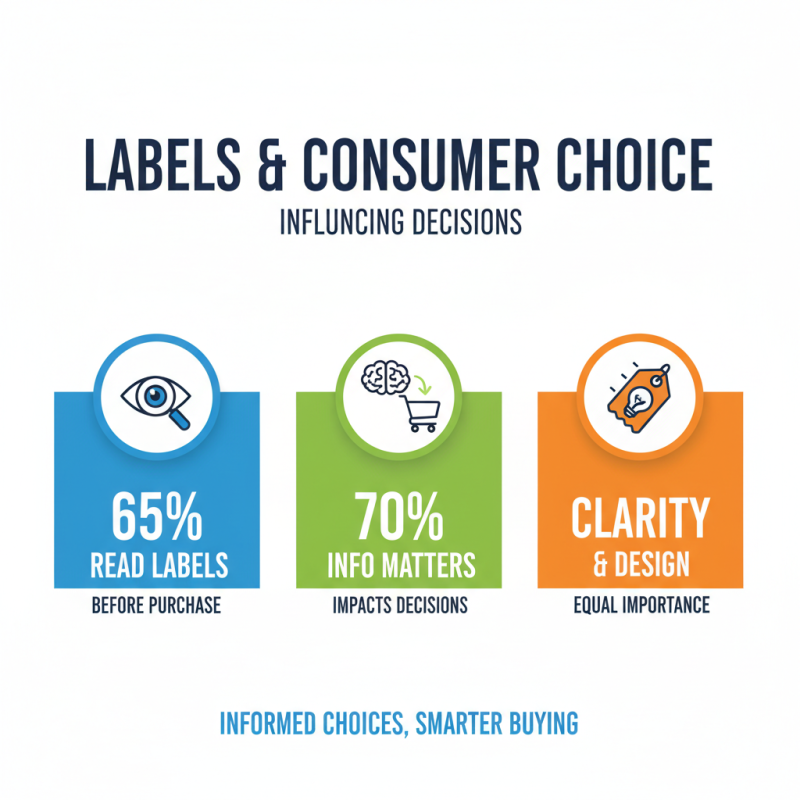
Labels play a crucial role in influencing consumer choices. Research shows that 65% of shoppers read labels before making a purchase. Furthermore, 70% express that product information heavily impacts their decisions. Clear and informative labels help consumers understand what they are buying. However, the design of these labels can be just as important as the information they convey.
Tips: Ensure your labels are clear. Use simple language and easily readable fonts. Bright colors can draw attention, but avoid overwhelming designs.
In a survey, 58% of consumers said they trust products with visible ingredient lists. Yet, many labels still lack transparency. Sometimes, complicated jargon confuses shoppers. Consumers may hesitate to buy products they don’t fully understand. It’s essential to create labels that inform, not alienate. Remember, simplicity is key.
Tips: Test your labels with real consumers. Get feedback on clarity and feel. Adjust based on their insights. Making small changes can lead to significant improvements in purchasing decisions.
Key Labeling Regulations and Their Impact on Consumer Trust
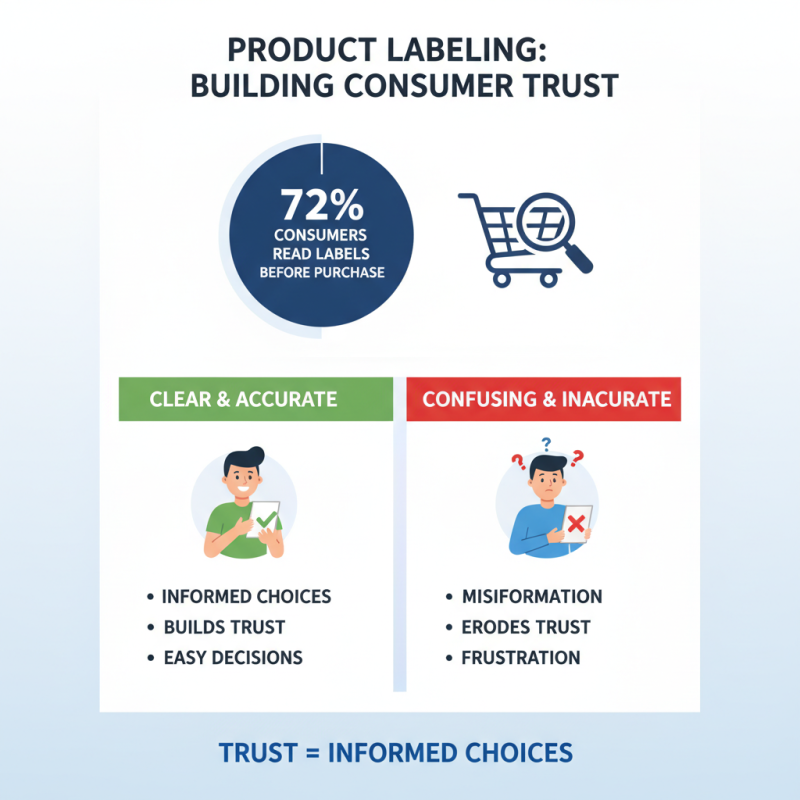
Product labeling plays a critical role in consumer decision-making. Clear and accurate labels help shoppers make informed choices. According to a survey by the Food Marketing Institute, 72% of consumers read product labels before purchasing. A well-design label builds trust. However, inconsistencies in labeling can lead to confusion. Many consumers feel lost when labels provide conflicting information.
Labeling regulations vary globally, impacting consumer trust differently. For instance, studies suggest that countries with strict labeling laws see higher consumer confidence. In Europe, over 80% of consumers trust products with transparent labels. Conversely, lax regulations can breeding skepticism. Many consumers question the authenticity of products with unclear labeling, creating a gap between brands and buyers.
The impact of labels is significant but often overlooked. Some consumers may interpret labels differently based on cultural contexts. Misleading labels can harm brands, leading to negative perceptions. In the end, the responsibility lies with manufacturers to ensure clarity and accuracy in labeling. Only then can brands foster genuine trust and loyalty.
Nutritional Information on Labels: Effects on Health-Conscious Choices
Nutritional information on product labels plays a crucial role in guiding consumer decisions. Many people are becoming increasingly health-conscious. They look for labels that provide clear information about calories, fats, and sugars. An eye-catching label can influence choices at the grocery store. However, deciphering complex nutrition facts can be challenging for some.
Many consumers may overlook important details. For instance, a product marked "low-fat" may still contain high sugar levels. Labels often use confusing terms that can mislead shoppers. This can lead to selections that do not align with health goals. People sometimes rely on buzzwords instead of addressing actual nutritional content.
Enhancing label transparency could promote healthier choices. Simplifying information might help people make informed decisions. For example, visual cues, like traffic light systems, could aid in quick assessments. Yet, consumers need to take responsibility for understanding what they eat. Ignoring these labels can impact overall health. It’s important to cultivate a habit of checking what’s on the label.
Understanding the Importance of Product Labels in Consumer Choice
| Nutritional Aspect |
High in Nutrients (%) |
Low in Sugars (%) |
Contains Healthy Fats (%) |
Consumer Preference (%) |
| Whole Grains |
85 |
90 |
70 |
75 |
| Fruits and Vegetables |
95 |
85 |
40 |
80 |
| Lean Proteins |
90 |
80 |
85 |
70 |
| Dairy Products |
60 |
70 |
65 |
50 |
| Processed Foods |
30 |
25 |
20 |
10 |
Sustainability Labels: Driving Eco-Friendly Consumer Behavior
Sustainability labels are reshaping consumer behavior in today's market. A recent study indicates that about 73% of consumers are willing to change their purchasing habits to reduce environmental impact. This reflects a growing awareness of sustainability issues among shoppers. They actively seek products with eco-friendly certifications, believing these labels signify responsible production practices.
However, not all sustainability labels are created equal. Some consumers express confusion over what various labels mean. A report reveals that only 38% of consumers fully understand the meaning behind sustainability labels. This gap highlights the need for clearer communication and improved labeling standards to help consumers make informed choices. Transparency is key; consumers demand clarity when deciding which products are truly sustainable.
The rise of sustainability labels also prompts reflection within companies. As they adopt eco-friendly practices, they must ensure their claims are truthful. A stark reality is that 30% of businesses face skepticism from consumers regarding their sustainability claims. This mistrust can hinder progress. For meaningful change, there must be consistent efforts in labeling accuracy and transparency.